How Online Water Quality Sensors Improve Industrial Wastewater Treatment
How Online Water Quality Sensors Improve Industrial Wastewater Treatment
Treatment facilities usually find out about problems the hard way, as results from their labs show up only after hours when the off-grade water has already been released. The solution lies in online water quality sensors, which measure pH, COD, total suspended solids, and other parameters in real time for immediate action on the change that has occurred. This manual will show you how this is done and the parameters that need measuring in an effluent treatment plant (ETP).
What Are Online Water Quality Sensors?
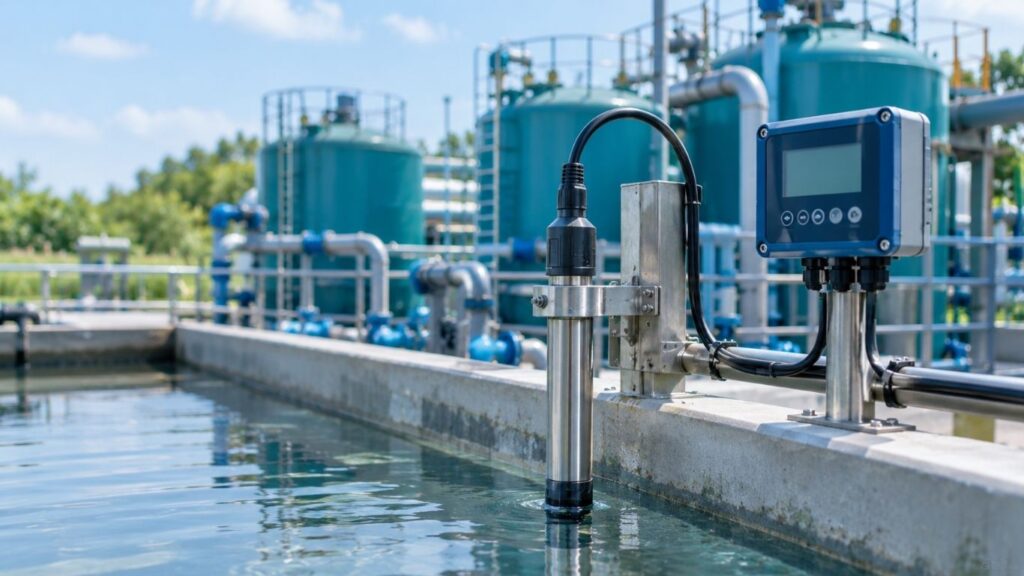
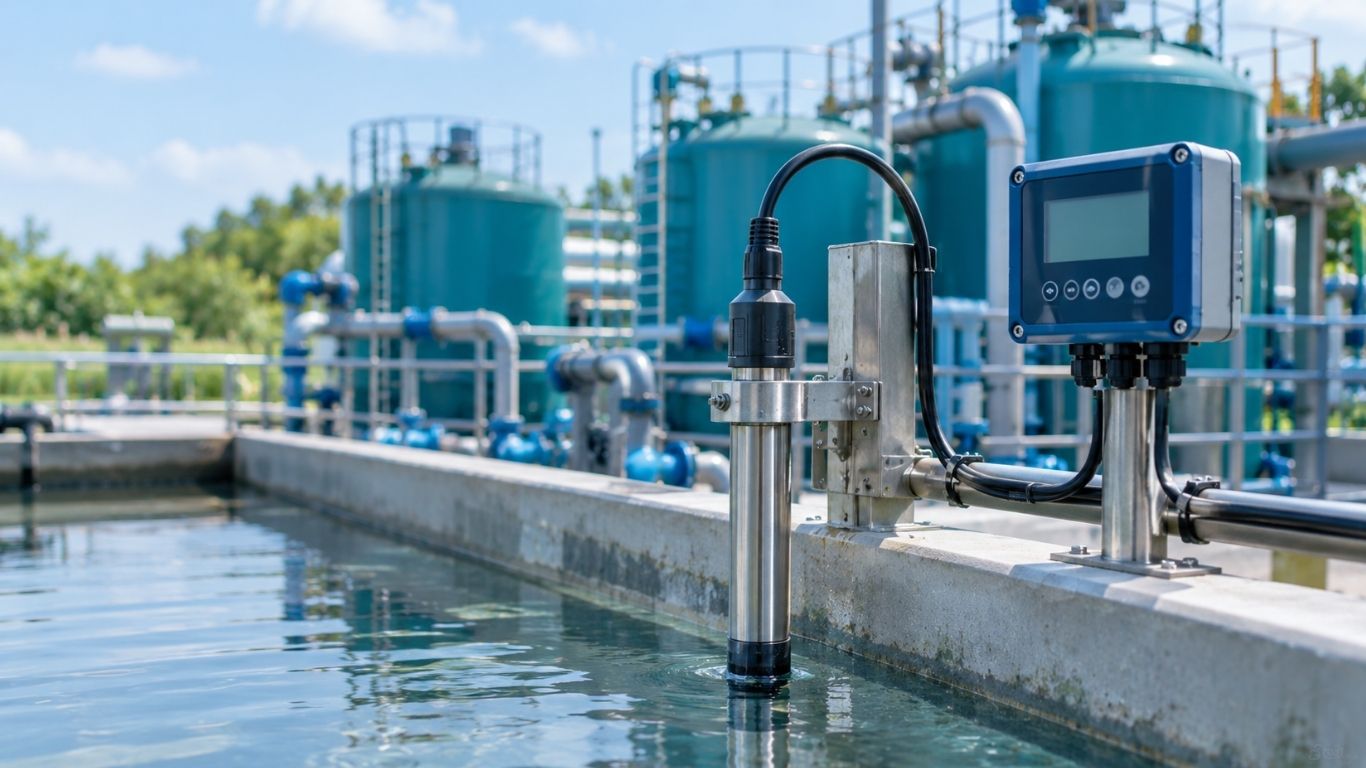
Online water quality sensors are those measuring devices which are placed directly into a pipe, tank or channel and continuously measuring water parameters and sending the data to a controller or SCADA system.
A grab sample provides only a momentary snapshot while an online sensor provides constant readings. Normally an online water quality measurement system includes a probe that measures a parameter, a transmitter or a controller that converts the signal and a data transfer channel to your plant display or logger. There are some digital probes available which make installation and calibration of sensors simpler.
Why Does Industrial Wastewater Treatment Need Real-Time Monitoring?
Due to rapid changes in industrial wastewater composition and narrow discharge limits.
A single cleaning cycle, a batch discharge or a shift change will affect your plant immediately. Taking samples twice per shift may result in missing the spike completely. The online water quality sensors detect the changes in time allowing to correct the dosing, aeration or flow parameters. This means no upset and better audit documentation.
Which Parameters Should You Monitor in Wastewater?
Start with pH, COD, TSS and dissolved oxygen and add parameters typical for your process. The choice of water quality online sensors should be customized to your needs, but consider the following list as the starting point.
pH and ORP
The pH regulates all the stages of water treatment process – neutralization and biological processes among others. The ORP parameter indicates the water oxidation or reduction state, which is required for chemical dosing and disinfection control. It is usually the first sensor installed at the plant.
COD, BOD and TSS
COD, BOD and TSS indicate the amount of organic and solid loading in your effluent. Optical sensors use light absorption or light scatter to determine COD, BOD and TSS. They give almost instant response; however, the readings are correlated with laboratory methods, hence the need to calibrate with lab results.
Dissolved Oxygen
Dissolved oxygen (DO) sensors will tell you whether your system is under-aerated or over-aerated; this means that biological treatment requires dissolved oxygen to decompose the waste.
Ammonia, Nitrate and Oil in Water
Nitrate nitrogen and ammonia sensors are essential in determining nitrification and denitrification. Oil-in-water sensors are necessary for refineries, workshops and food processing facilities where oil carryover may cause problems further downstream.
How Do Online Water Quality Sensors Improve Treatment Performance?
It improves performance through providing information for operators to act on. This will lead to faster reaction, improved process control and records. Usually, there will be benefits in the following five aspects:
- Faster reaction to upset. An alarm on pH change or increasing TSS will allow actions to be taken before out-of-spec water goes to the next process.
- Improved chemical dosing. Dosing according to real-time pH or ORP readings, not a preset time table, may reduce over-dosing and waste of chemicals.
- Reduced aeration cost. DO feedback controls blower according to demand. In many cases, aeration will consume most energy in the plant.
- Fault detection in time. Slow drifting of conductivity or ammonia can indicate problems such as faulty pumps, leaking valves or process changes.
- Compliance demonstration. Continuous record makes it much easier to prove effluent was in compliance, and find out what caused the violation.
Consider a textile unit whose dye house discharges in batches. With manual sampling, the neutralization tank is adjusted after the lab reports. With a pH sensor and a TSS sensor on the same line, the operator sees the batch arrive and the dosing pump can respond within minutes.
How Do You Install Online Water Quality Sensors Step by Step?
Pick your measurement points, select online water quality sensors for your wastewater, install them with ease of access, and calibrate according to laboratory results. Below are some practical steps:
- Sketch your process. Identify the inlet point, equalization basin, biological stage, and the exit point of the plant and determine what you want to monitor.
- Identify the parameters. Match each point to a limited number of sensors. Do not feel the need to monitor everything at the start.
- Determine the nature of the water. Solid particles, oil content, temperature, and chemical concentration influence your choice of sensors and housing materials. Provide such information before ordering online water quality sensors.
- Install probes in water representative areas. Avoid installation near dead zones, places with high air bubble content, and locations near chemical dosing points.
- Think about maintenance. Your sensor can only be checked and maintained if it is accessible.
- Calibration and verification. Check the readings in laboratory conditions and adjust them accordingly.
- Set alarm levels properly. Set alarm values within the limit of your discharge permit and narrow them down with time.
What Maintenance Do Online Water Quality Sensors Need?
Cleaning and calibration with frequency depending on the level of contamination of your water. Online water quality sensors in wastewater can be affected by fouling due to the biofilm formation, presence of oil, and suspended solids. The dirt on the optical window gives you a reading that is either too high or too low while an oil-contaminated pH electrode would have a slower response. Many facilities typically start with weekly checkup and increase or decrease the frequency of maintenance depending on their findings. Have spares and calibration standards on hand and make a note of each service so that the repetitive problems can be identified.
Where Does Fluidings Fit In?
Fluidings Technology is a Navi Mumbai-based company that specializes in online monitoring of industrial processes and pollution sources. This company’s product line includes pH/ORP, COD/BOD/TSS, Dissolved Oxygen, Ammonia & Nitrate nitrogen, Oil-in-water, Conductivity, Residual Chlorine, and Multi-parameter series sensors that help you design the whole monitoring system around your own ETP/STP. If you have difficulties in choosing the right sensors for your effluent, it would be reasonable to consult technical specialists first.
Conclusion
Online water quality sensors are not designed to treat wastewater. Instead, they will make your current process work more efficiently and reliably, providing you with the insight that helps when the action is still possible. Begin by choosing pH, TSS and DO monitoring and learning about your wastewater plant’s performance, then add more.
If you would like to take a look at the product range, go to the product page, or contact the Fluidings team to get a quote or consultation on wastewater sensors.
Frequently Asked Questions
1. What are the purposes of online water quality sensors in the process of wastewater treatment?
Sensors monitor parameters such as pH, COD, TSS, dissolved oxygen and ammonia continuously. Operators use the data provided to adjust dosing and aeration rates, detect process upsets quickly, and maintain records of effluent quality. Online sensors replace or complement manual sampling.
2. What is the accuracy of online COD and BOD sensors?
Optical COD and BOD sensors work by measuring light absorption and estimating COD and BOD values; therefore, their readings are not identical but correlated with laboratory methods. Proper calibration with laboratory values for your specific wastewater gives reliable trends and rapid notifications.
3. How frequently should online water quality sensors be calibrated?
This will depend on how fouling-prone the water is. Typically, many plants will test weekly and calibrate monthly, depending on drift. Where there is a lot of oil and solids, then cleaning should be done more often, but where water is clean, then the frequency can be higher. Always consult the manufacturers’ recommendations for each individual sensor.
4. Which sensors should a small ETP have first?
Generally, a small ETP will have pH/ORP, TSS/Turbidity and dissolved oxygen as their first three sensors since they impact treatment process and compliance. Once the plant is stable, one will add COD and ammonia or oil-in-water sensors to complete the set-up.
5. Can online sensors help with compliance with discharge regulations?
Yes, since online sensors help one stay within the limits of regulation through early detection and record-keeping. Sometimes regulators require certain sensors to be installed as part of monitoring system. Make sure you confirm the local requirements before installing them.