Online Oil-in-Water Sensor: Applications in Industrial Water Monitoring
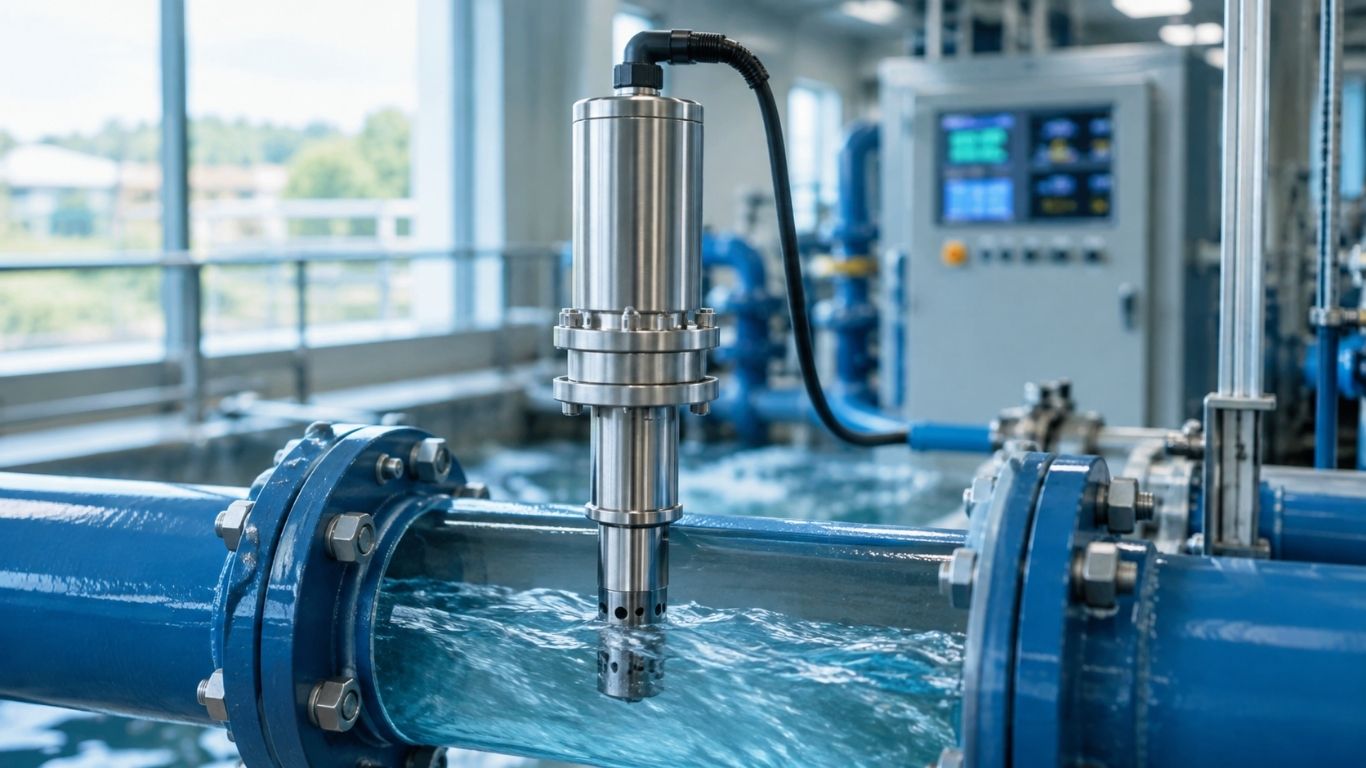
Online Oil-in-Water Sensor: Applications in Industrial Water Monitoring
Learn about the benefits of online hydrocarbon monitoring in protecting equipment, maintaining compliance in effluent, and making decisions based on actual information rather than speculation – as well as what to look for when choosing a sensor for your plant.
An issue of hydrocarbons in process water is an expensive problem for businesses. It clogs up pipes, triggers alarm systems, and damages the equipment long before any leakage is spotted. The solution to such problems can be found in the implementation of the online oil-in-water sensor. It provides measurements of hydrocarbons levels in real-time, rather than hours later once the damage has been done.
What Is an Online Oil-in-Water Sensor?
Online oil-in-water sensor is an instrument designed for real-time measurements of oil or hydrocarbons concentration dispersed in water, without taking samples to laboratory. Usually, such units display their measurements in ppm and transfer that data directly to a control system or SCADA panel.
As compared to manual measurements, an online oil-in-water sensor works continuously, providing the operator with a trend chart rather than a measurement of a grab sample collected once a shift. This is important, since oil content may rise dramatically within minutes and any delay in measurement will make the measurement ineffective anyway.
How Does an Online Oil-in-Water Sensor Work?
A simple answer is that nearly all of them work on fluorescent or ultraviolet light scattering principle.
Fluorescence-Based Detection
Hydrocarbon molecules exhibit fluorescent behavior upon exposure to ultraviolet light. In a fluorescence sensor, ultraviolet light is directed to the sample and the intensity of scattered light of another wavelength is measured. Its intensity is correlated directly with oil concentration. This method fits well to refined oils, lubricants and many types of petroleum products and is also insensitive to turbidity.
UV Light Scattering and Absorption
Some instruments detect the amount of scattering or absorption of light through the sample. This method is suitable for denser and less fluorescent oils like crude oil. Instruments that can be used in dual mode use both methods for more accurate detection in various oils and water.
Why Industries Need Continuous Oil-in-Water Monitoring
Short answer: unreported carryover of oil leads to damage of equipment, exceeds discharge levels, and goes undetected between manual samplings.
Protecting Downstream Equipment
Film of oil on heat exchangers, membranes, and pumps will make equipment work inefficiently and reduce its lifespan. Early detection of increased oil level in water allows operators to trace the source of problem before it becomes too widespread.
Meeting Discharge and Compliance Standards
Environmental agencies impose stringent regulations regarding oil levels in discharge water prior to its being discharged into rivers, coastal waters, and municipal wastewater systems. The continuous monitoring provided by an online oil-in-water analyzer provides more concrete proof during an inspection process than any number of random grab samples can.
Reducing Operating Costs
Laboratory analysis is time-consuming and requires reagents and labor. The unattended operation of a sensor system saves costs while detecting issues that may not be detected by a single grab sample.
Signs Your Plant Needs Continuous Oil-in-Water Monitoring
Short answer: equipment fouling, borderline readings, and dependence on occasional grab samples will be the telltale signs.
Several things commonly precede facilities making the change to continuous monitoring:
- Frequent cleaning is required of filters, membranes, or heat exchangers not scheduled by the maintenance program.
- Lab samples come back occasionally on the border of regulation, with no way to tell what happened between sampling.
- Oil upsets go undetected until they have already gone through the system.
- Audit preparations consist of finding paper records, as opposed to the continuous online data available.
- If you see any of the above in your facility, an online oil in water sensor pays for itself in a matter of months.
Key Applications of Online Oil-in-Water Sensors in Industrial Water Monitoring
Industrial Waste Water Treatment
The treatment plant uses an online oil-in-water sensor at both the inlet and outlet ends to ensure separators and skimmers are functioning properly, and to identify any upsets that may occur before they get to the final discharge point.
Oil and Gas Produced Water
The produced water from oil drilling operations has crude oil traces. In this case, online oil-in-water sensors will protect the equipment from contamination and help achieve compliance before being discharged or re-used for irrigation or industrial purposes.
Power Plant Cooling Water
Lubricating oil from turbines and compressors may seep into the cooling systems. The sensor on the return lines detects contamination before it reaches the cooling towers or is discharged into the river or sea.
Marine and Ballast Water
Ships use oil content meters to test whether the bilge water is up to 15 ppm according to MARPOL regulations before discharging. In this scenario, the online oil-in-water sensor helps monitor continuously.
How to Choose the Right Online Oil-in-Water Sensor
Short answer: Ensure that the sensing principle, measurement range, and certificates are right for your type of water and any applicable regulations.
- Determine the type of oil you will be detecting – Refined oils and crude oils behave differently when it comes to fluorescence and scattering; thus, choose sensors certified for your particular product.
- Ensure that the sensor has the right measurement range – Verify that your sensor detects your ppm range while allowing room for sudden surges.
- Obtain the right certifications – ISO, CE, and RoHS certifications are a must where your application is concerned.
- Consider maintenance – A sensor with self-cleaning optics or a wiper is a better choice since it reduces the risk of fouling the readings before service.
- Check the sensor’s ability to integrate – Your sensor should give outputs that can be read by your SCADA or multiparameter system.
Fluidings’ Approach to Oil-in-Water Monitoring
Fluidings develops online oil-in-water detectors for the refined oil and crude oil sectors with over 25 years of expertise in industrial water quality detection. These detectors work with multi-parameter systems including pH, turbidity, COD/BOD, and others, so that facilities get one control panel rather than several instruments. All our detectors have ISO, CE, and RoHS approvals. Our technical engineers also install our equipment in India, the Middle East, and other places around the globe.
If you use manual sampling at your facility, then it is time for you to learn about the benefits of continuous monitoring. Check out our line of oil-in-water detectors, get a quote, or schedule a consultation with our experts.
Conclusion
An oil-in-water sensor installed online transforms an activity done only once a day into a constant process. It is especially important for those companies dealing with the treatment of wastewater, produced water, and cooling systems. No matter what sector of economy a company belongs to, the choice of the sensor appropriate for specific types of oil and water is the first step to success.
Frequently Asked Questions
What is an online oil-in-water sensor for?
An online oil-in-water sensor is used to monitor the presence of hydrocarbons in water continuously, normally in ppm, without having to take any manual samples. Industries such as wastewater management, oil and gas, power generation and maritime transport use the instrument to safeguard their equipment, verify functioning of separators and demonstrate discharge compliance.
How accurate is an online oil-in-water sensor?
The accuracy of the sensor depends on its detection mechanism and calibration process. The sensors that use fluorescence technology are known to detect oil concentrations of several ppm while the ones that employ UV scattering technology work for oils such as crude oil. The device is normally calibrated using a reference standard sample.
Can the same online oil-in-water sensor be used to detect both crude and refined oil?
Some dual mode online oil-in-water sensors detect both types of oils using fluorescence and scattering technologies, while most plants opt to use separate sensors validated for crude oil or refined oil.
How frequently should an oil-in-water sensor online be calibrated?
Depending on the quality of the water and the manufacturer’s instructions, the frequency of calibrations can differ. However, for most plants, the frequency is usually every few months. Self-cleaning sensors retain their accuracy longer before servicing compared to regular sensors.
Is it necessary to have oil-in-water monitoring online due to regulatory requirements?
There are areas where oil content in the wastewater needs to be below a certain level according to the regulations in force. Some permits will demand continuous monitoring.