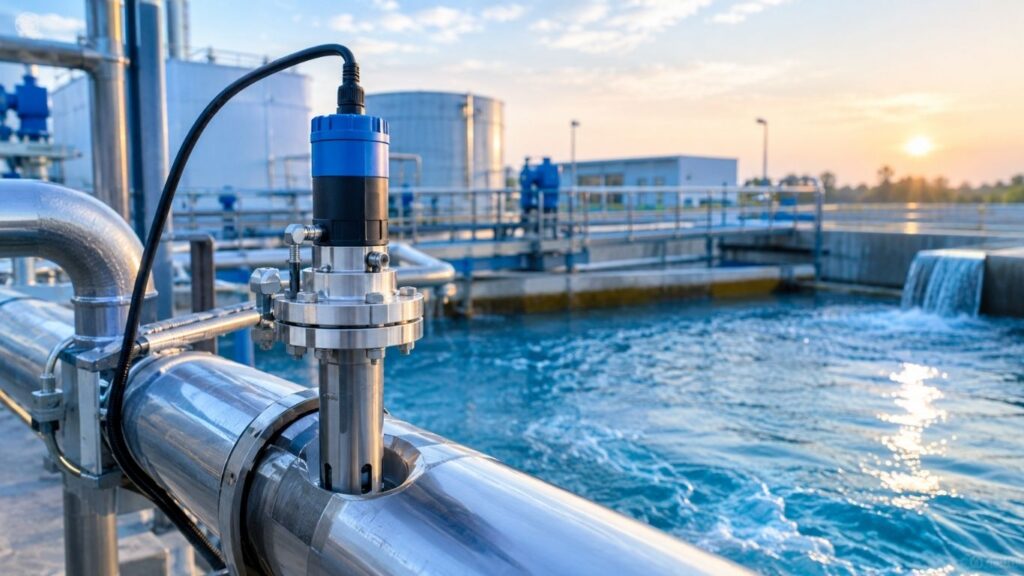
Total Nitrogen Sensor in India: Understanding the Mechanisms of Online Total Nitrogen Measurement
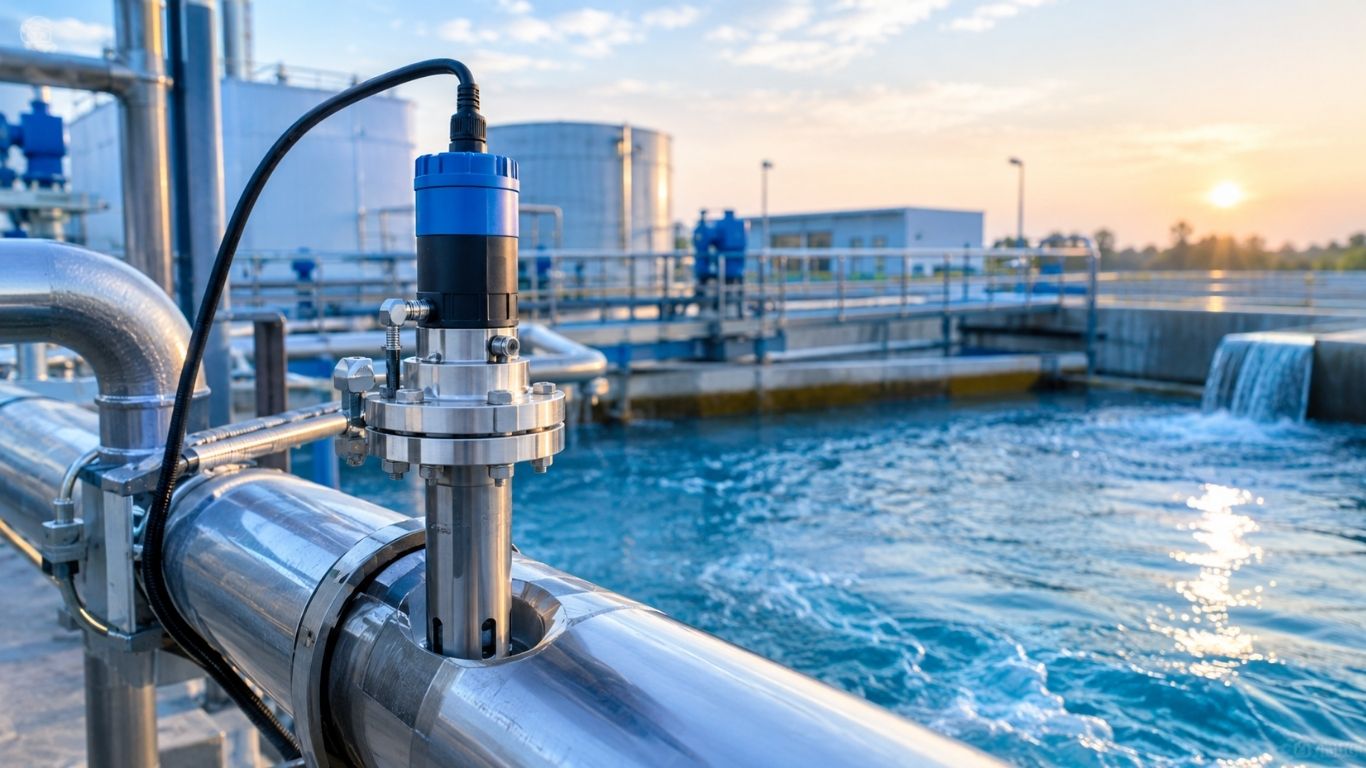
Total Nitrogen Sensor in India: Understanding the Mechanisms of Online Total Nitrogen Measurement
Nitrogen pollution has become one of the most important environmental challenges faced by India. The daily discharges of effluent from treatment plants have high concentrations of nitrogen compounds, and these compounds have to be monitored now. That is why a Total Nitrogen Sensor in India has become more than a useful instrument for ETPs, STPs, and process industries.
As the operator of a water treatment plant, you certainly understand how time-consuming manual analysis can be. You spend hours on sample preparation. Then samples lie in the queue and wait for an analysis. You get your results a day later. By that time, the water has already been discharged from the plant. A Total Nitrogen Sensor in India helps solve this problem by measuring the concentration of nitrogen all the time at the discharge or treatment point.
In this article, we will discuss what total nitrogen is, what its role in Indian industries is, how online total nitrogen measurement is performed, what places are suitable for such sensors, what to consider when purchasing one, and what kind of support Fluidings provides in this field.
What Is Total Nitrogen, and Why Does It Matter?
The measurement of total nitrogen includes all the different types of nitrogen in the water sample. These include organic nitrogen, ammonia nitrogen (NH4-N), nitrite nitrogen (NO2-N), and nitrate nitrogen (NO3-N). Rather than having to test each type individually, the total nitrogen sensor gives you a total measurement for all nitrogen.
Why is this so important? The reason why is that when too much nitrogen gets into a river, lake, or sea, it causes eutrophication. There are rapid algae blooms, the amount of oxygen decreases, and this harms marine life and can lead to the destruction of the whole ecosystem.
Indian pollution control boards have been tightening up standards for the nitrogen discharge of textile, pharmaceutical, food processing, and municipal industries. A Total Nitrogen Sensor in India ensures that these levels remain within safe limits at all times.
How Does a Total Nitrogen Sensor Work?
The total nitrogen sensor is a measuring device that uses oxidation and optochemistry to detect nitrogen compounds. Below is a schematic outline of a typical operation sequence of an online TN sensor:
- Taking the sample – the probe takes a sample of water from the stream or discharge pipe;
- Digestion or oxidation – the taken sample is subjected to alkaline persulfate digestion, which transforms all forms of nitrogen into nitrate form;
- Optical analysis – the concentration of nitrate is measured via UV absorption or colorimetry;
- Converting the measurement – the nitrate concentration is converted into a TN level, which is expressed in mg/L units;
- Reporting the results – the measurement is sent to a controller or SCADA system, where thresholds may be defined as alarm limits.
Some more advanced sensors perform optical analysis without digestion using UV spectrophotometer in the water. It allows analyzing the water faster and requires less reagents.
Why Choose Online TN Monitoring Over Lab Testing?
Lab analysis is not incorrect. It’s just slow. Grab sample analysis can take 24 to 48 hours to provide the results. Until then, your plant is blind about its operations. In case of elevated nitrogen levels caused by a process upset, you will learn about it only after the fact.
Continuous online TN monitoring eliminates this delay by providing continuous readings that may be obtained several times per minute. This is especially critical in cases where:
- There are stringent discharge limits.
- There is frequent inspection.
- The process conditions vary rapidly (batch manufacturing).
The installation of a Total Nitrogen Sensor in India at the correct sampling location allows you to do all of this without taking time from other work.
Where Is Total Nitrogen Monitoring Used in India?
Nitrogen monitoring is not confined to one type of business. These are some of the applications of nitrogen monitoring in India:
Sewage Treatment Plants (STPs)
For municipal STPs, nitrogen discharge needs to be in line with the norms for effluents to be discharged to the rivers or for re-use. Constant monitoring of TN assists in adjusting aeration and biological treatment processes.
Effluent Treatment Plants (ETPs)
ETPs from textile, pharmaceutical and chemical industries produce nitrogen rich wastewater. An online monitoring sensor detects any deviation before turning into non-compliance.
Aquaculture and Fisheries
Ammonia among other nitrogen compounds is highly toxic to fish in high concentrations. Both ammonia and TN sensors are used by fish farms to ensure fish safety.
Agriculture and Rice Fields
Monitoring is used by farmers and researchers to study nitrogen content from fertilizer runoff that ends up in the irrigation water.
Drinking Water Treatment
Nitrate is known to be dangerous for health when there’s an excess of it in drinking water. Nitrogen monitoring is used as part of water treatment protocol by utilities.
Key Features to Look for in a Total Nitrogen Sensor
Not all sensors are equal when it comes to their performance in Indian environmental conditions. These are the features that need to be checked before purchase:
- Measurement range and precision – Ensure that the sensor range is consistent with the TN concentration you can expect, either the drinking water or industrial effluent variety.
- Maintenance requirements – Anti-fouling probes or self-cleaning wipers will minimize cleaning requirements in highly turbid water.
- Operation without reagents – UV-based sensors minimize the costs of consumables in the long run.
- Protocols of communication – Ensure that the sensor uses 4-20mA, RS485, or Modbus for communication with SCADA or PLC system.
- Certification and quality control – ISO, CE, and RoHS certification mean that the sensors meet recognized manufacturing standards.
- Proximity of local support – Once the sensor is installed, calibration and spare parts availability become much more important than technical documentation.
How Often Should You Calibrate a TN Sensor?
Calibration requirements vary depending on the water quality and sensor type, however, most online TN sensors require verification once per month, or every one to three months. Facilities working with very variable effluent or effluent with solids content should verify the sensor readings more often to ensure their accuracy. Calibration prolongs the lifespan of the sensor and helps you maintain the reliability of your compliance reporting.
Benefits of Installing a Total Nitrogen Sensor in Your Plant
There are several advantages in adopting an online TN sensor for your plant operations:
- Faster upset response – Detect TN spikes within minutes instead of days.
- Less lab workload – Send fewer samples to the laboratory; save money in annual testing costs.
- Better compliance data – Log continuous data for regulatory audit purposes.
- Process optimization – Tune your biological processes with the help of real-time information instead of delay results.
- Penalty prevention – Avoid possible penalties due to early TN spikes detection.
The above advantages compound into the additional one. If your plant detects the problem early enough, it can avoid both the penalty and the associated bad reputation.
How Fluidings Supports Nitrogen Monitoring in India
Fluidings Technologies has been involved in the online water quality monitoring business for more than 25 years, providing sensors for pollution source monitoring and industrial process control in India and Middle East regions. Our product portfolio consists of nitrate nitrogen sensors, ammoniacal nitrogen sensors, and multi-parameter combination probes including the NH4+/pH/NO3- combination sensor that is specifically designed for such nitrogen monitoring as described in this article.
All sensors that we provide have ISO, CE, and RoHS certifications and we provide installation, calibration and post-sales services from our Navi Mumbai location. Depending on what STP, ETP or aquaculture system you are operating, we will be able to recommend the correct configuration of sensors for your application and discharge requirements.
When considering sensor solutions for your facility, it may be reasonable to look through our nitrogen and water quality monitoring sensor portfolio, or contact us directly for consulting on your discharge requirements.
Conclusion
It seems that nitrogen contamination will not be solved anytime soon, and regulation of it is getting even stricter within Indian industries. A Total Nitrogen Sensor in India is exactly what plant managers need to have the real-time control over nitrogen concentration levels that laboratory tests cannot provide them with. Irrelevant of whether you operate municipal STP or industrial ETP, online total nitrogen monitoring is always a good choice.
Need to find out which sensor setup is right for your plant? Contact us today to get a quote or visit our product catalog page to check your options.
Frequently Asked Questions
What is the difference between total nitrogen and ammonia nitrogen?
While total nitrogen concentration contains the sum of organic nitrogen, ammonia nitrogen, nitrite and nitrate concentrations, ammonia nitrogen consists only of the ammonia nitrogen part. A Total Nitrogen Sensor in India gives you a wider insight into nitrogen pollution levels, and ammonia sensor measures only one type of contaminant important from toxicological and operational aspects.
2. What is the accuracy of online total nitrogen analyzers relative to conventional laboratory techniques?
Modern online TN analyzers have accuracy comparable to conventional laboratory digesters, primarily UV-based. This depends on the calibration, sample preparation and maintenance of the analyzers. As a part of the confirmation for compliance purposes, many plants compare the readings of the analyzer with laboratory testing results periodically.
3. What are the recommended locations in the treatment facility for the installation of the Total Nitrogen Sensor?
Depending on the purpose, locations can differ. If used for compliance purposes, it is located at the discharge point. As a tool for process control, sensors are usually located post-biological stages of treatment (e.g., the aeration tank or anoxic zone).
4. Are total nitrogen sensors requiring reagents?
Yes, but only certain types. Alkaline persulfate digestion requires some. However, UV spectrophotometric sensors don’t require reagents at all.
5. What is the most important industries for nitrogen monitoring in India?
Textile, pharmaceuticals, food processing, municipal sewage, and aquaculture industries require the most stringent regulations in respect of nitrogen monitoring. Every plant that discharges treated water to the rivers, coastal zone, or reused system needs constant TN monitoring to evade punishment.