Online Water Quality Monitoring System in India: A Complete Guide for Industries
Online Water Quality Monitoring System in India: A Complete Guide for Industries
Today, water pollution control has become a continuous operation rather than just being on paper. An online water quality monitoring system in India is at the heart of today’s monitoring of water pollution by factories, treatment facilities, and pollution control boards. In case you own an industrial facility that either discharges water or treats it, you should know what an online water quality monitoring system in India does and why you need it.
What Is an Online Water Quality Monitoring System in India?
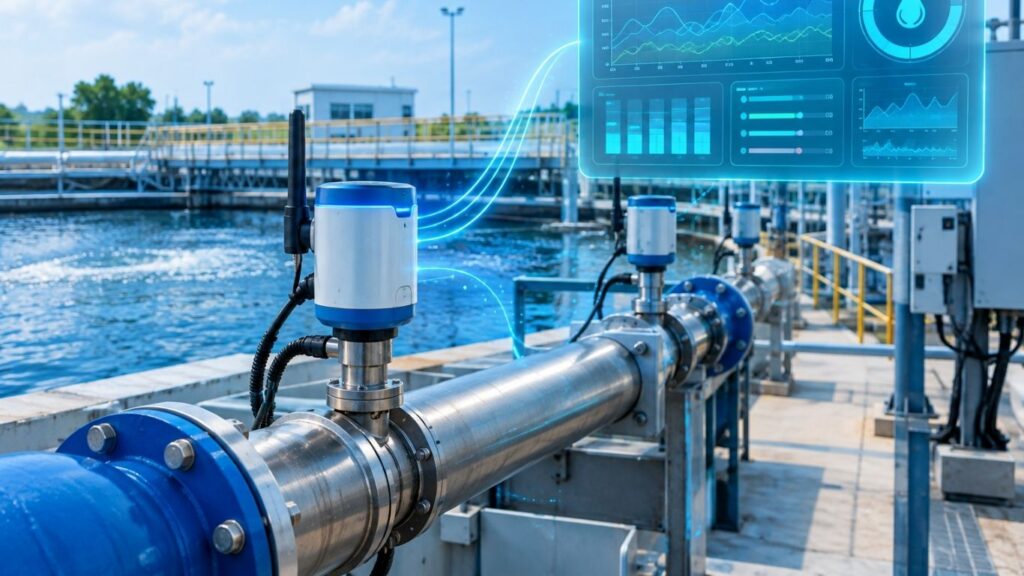
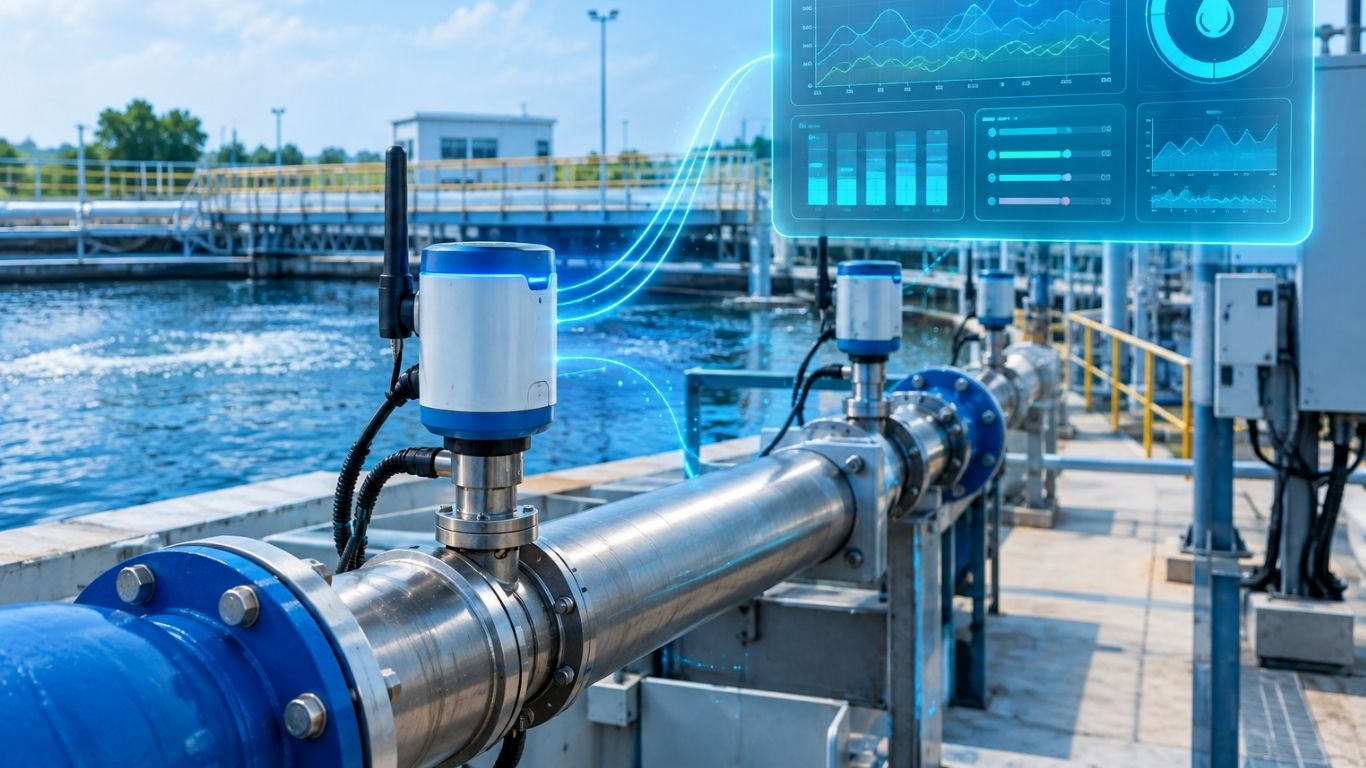
An online water quality monitoring system in India is a set of sensors, transmitters, and software programs that monitor water quality parameters in real-time and transmit the results to a central computer program. While traditional lab tests give you a report either once a day or once a week, such online systems monitor water parameters all the time.
There are two main purposes of using water quality monitoring systems in industries. First of all, regulatory agencies such as CPCB or state-level pollution control boards require monitoring of emission of some pollutants by certain industrial facilities continuously. Secondly, you want to receive warning about a possible upset before violating the effluent discharge standard.
Why Indian Industries Need Continuous Water Monitoring
Environmental laws in India have been progressively tightening over the last decade. CPCB stipulates that red and orange category industries must be fitted with Online Continuous Effluent Monitoring Systems and send the data in real-time to respective states’ boards. In addition to the laws, there are three reasons why companies should monitor water quality continuously:
- Faster fault detection – Increased TSS levels or decreased levels of dissolved oxygen may indicate problems with pumps or clogged filters before laboratory tests prove them.
- Lower compliance risk – Real-time alarms will help industry personnel to fix any deviation from standards before they are detected.
- Better resource planning – Continuously collected data enables to dose chemicals precisely, thereby reducing costs.
Textile, pharmaceuticals, chemical, food processing, and power are some industries that most often use such monitoring system due to changing characteristics of effluent.
Key Parameters Every System Should Track
An effective online water quality monitoring system in India cannot be restricted to only one or two parameters. Based on your industrial sector, you will usually have sensors for:
pH, ORP, and Ion Levels
pH is an indication of whether water is acidic or alkaline; ORP determines oxidation-reduction potential, which is significant for disinfection.
COD, BOD, and TSS
COD, BOD, and TSS measure the organic pollution load in water along with suspended solids and make up the essential parameters of the pollution board discharge report.
EC, TDS, Salinity, and Resistivity
This helps measure the dissolved salts and ionic content, which can be important in boiler feed water and RO plants.
Dissolved Oxygen
Essential in aquaculture, effluent treatment ponds, and other applications where aquatic life requires certain oxygen levels.
Residual Chlorine, ClO2, and Ozone
This type of sensor confirms that disinfection processes are going on as expected in both water treatment plants and cooling water applications.
Oil-in-Water and Nitrogen Compounds
Typically, refineries and food plants use oil-in-water sensors, whereas the agricultural and sewage industries monitor ammoniacal and nitrate nitrogen compounds.
How Does an Online Water Quality Monitoring System Work?
It’s much more straightforward than most people think:
- Sensors are put at either intake, treatment, or discharge points.
- The probes constantly measure the chosen parameter, such as COD or turbidity.
- The sensor signal is translated into digital information by a transmitter.
- The data is sent to the controller or dashboard, which displays trends to operators instantly.
- Alarms will go off automatically if the reading exceeds a certain threshold.
This cycle keeps running, which is precisely why online monitoring systems differ from traditional grab sample lab analysis.
Choosing the Right System for Your Industry
However, not all plants need all types of sensors. A textile dyeing facility is extremely concerned about COD, BOD, and color, while a pharmaceutical plant has its focus on TOC and conductivity. An aquaculture farm has all its fate in dissolved oxygen. Some of the questions to be asked before choosing online water quality monitoring system in India are:
- What is your pollution control board really requiring of your type of industry?
- Which parameters have always been creating problems for your compliance?
- Do you need a sensor of one parameter or do you need a multivalent sensor which measures several parameters at once?
- Does the supplier provide ISO, CE or RoHS certified instruments suitable for industrial use?
Fluidings Technology, located in Navi Mumbai, has accumulated experience of over 25 years in the sphere of water treatment and monitoring technology. The range of sensors provided by Fluidings includes sensors for pH/ORP/ION, EC/TDS/Salinity, COD/BOD/TSS, dissolved oxygen, chlorine dioxide, oil-in-water, and multivalent sensors.
Common Challenges Industries Face
The most common issues are those that cause even reliable systems to face trouble. Sensor fouling due to suspended solids, drifting calibration over time, and lack of connectivity at remote plant sites are the three issues raised frequently. An online water quality monitoring system in India takes all of these factors into consideration in its design, incorporating self-cleaning sensors, easy calibration methods, and durable transmitters suited to Indian industrial conditions rather than foreign systems made for milder conditions.
Benefits Beyond Compliance
Enterprises that install monitoring systems typically realize unexpected cost savings in the process. Dosing is improved, energy consumption is reduced in aeration systems, and unanticipated downtime is minimized as issues become apparent sooner. The bottom line is that an online water quality monitoring system in India is worth the investment in many ways.
Conclusion
Water monitoring systems for industries are now a must and not just an option in the majority of cases in India, driven by regulations as well as by the actual consequences of unnoticed faults in a production process. The online water quality monitoring system in India offers the necessary visibility for the operator – regardless of whether it’s COD in a textile factory or dissolved oxygen in the pond for aquaculture. If your plant currently operates only with manual sampling, then now could be a good moment to think about the potential benefits of using an online water quality monitoring system. Fluidings Technology’s engineers will help you select the required sensors – contact them for consultations or quotations.
FAQs
What is an online water quality monitoring system used for?
An online water quality monitoring system is utilized for the continuous measurement of various parameters in water (e.g., pH, COD, BOD, TSS, dissolved oxygen), transmitting data to the plant operator instantly.
2. Are online water quality monitoring systems mandatory in India?
Yes, it is mandatory in red and orange category industries. The CPCB and State Pollution Control Boards mandate the use of Online Continuous Effluent Monitoring System (OCEMS) for units that exceed pollution norms and provide real-time data transmission to the regulators’ server.
3. What are the industries which require continuous water quality monitoring the most?
The industries like textile, pharmaceutical, chemical, food processing, power, and aquaculture need continuous water quality monitoring the most. These industries involve effluents with fast varying characteristics and thus need monitoring through continuous water quality monitoring system.
4. How frequently should water quality sensors be calibrated?
Water quality sensors calibration frequency varies from one industry to another. Generally speaking, industrial water quality sensors need to be checked once in a month or two months at max.
5. How do I select water quality monitoring system for my plant?
Firstly, check what your pollution board mandates and then select the appropriate sensors for your processes. Multi-parameter sensors can be considered, and certified water quality monitoring systems suitable to Indian industry conditions should be selected.