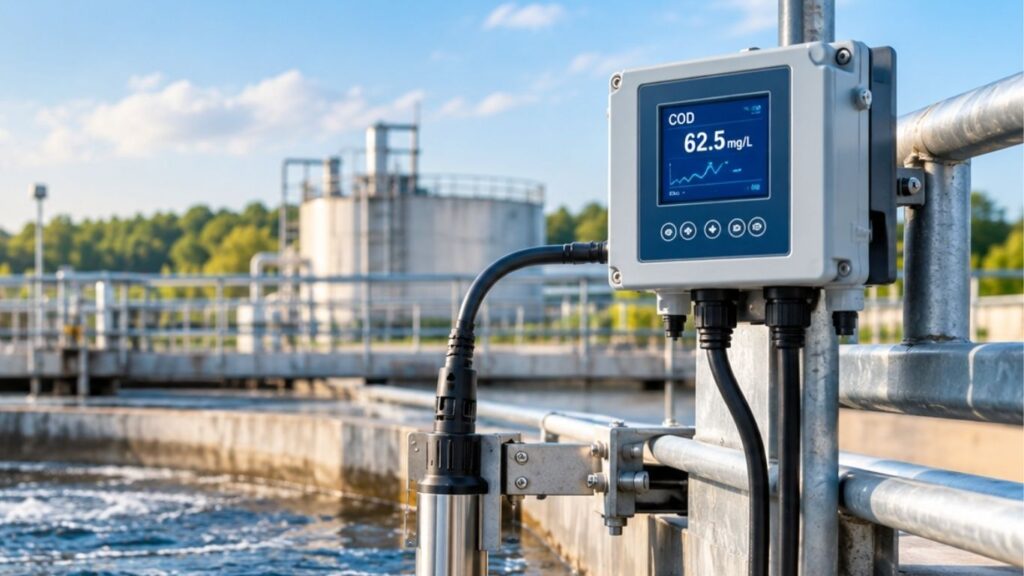
Continuous COD Monitoring Sensor: How to Select the Right Online COD Analyzer
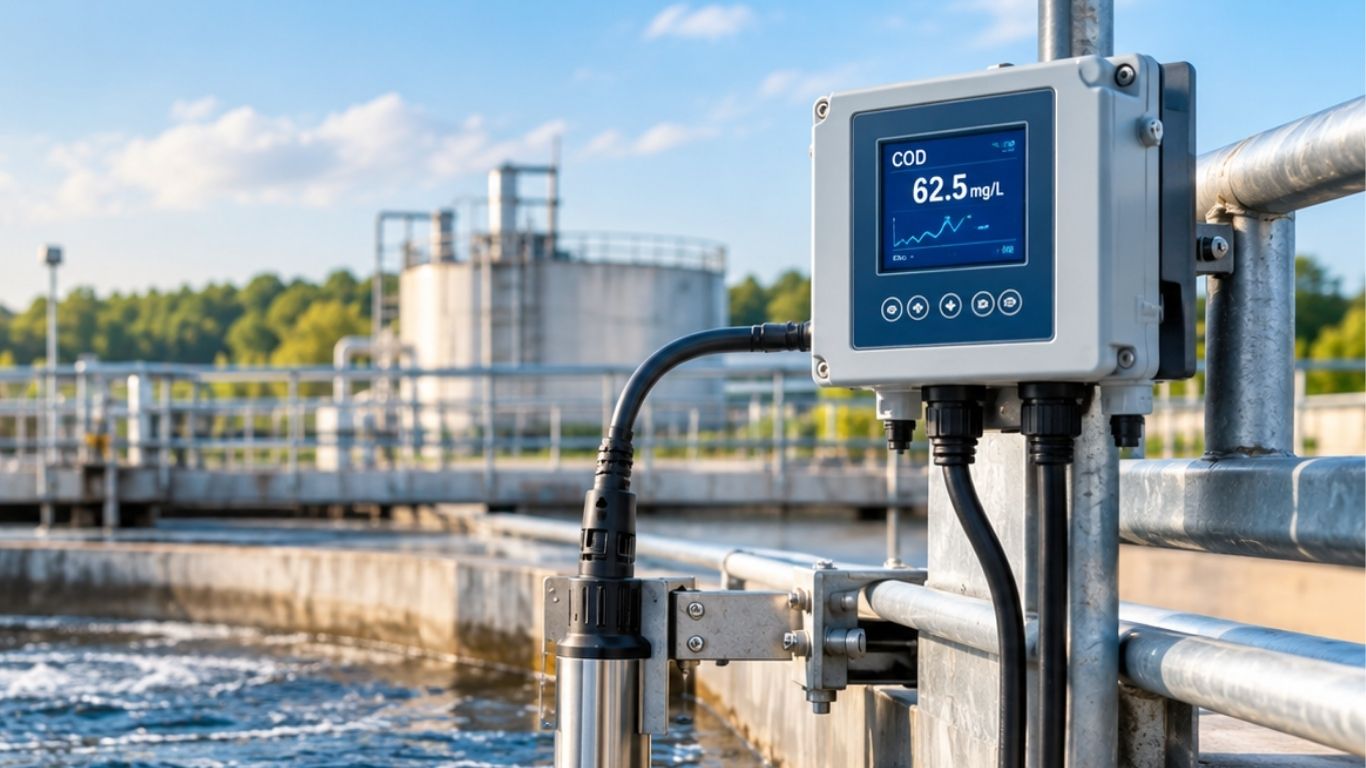
Continuous COD Monitoring Sensor: How to Select the Right Online COD Analyzer
The continuous COD monitor keeps track of the organic load present in your water or wastewater continuously, meaning you detect a pollutant surge at the very moment it occurs rather than learning about it days after in your laboratory analysis results. If your facility operates on the basis of discharge requirements, this is the difference between fixing an issue and explaining it to the regulators.
Selecting the most suitable online COD monitor is often not an easy task, however, as there are different methodologies, different effluents, and a COD monitor that works well in textile industry effluent might struggle in food plant effluent.
What Is a Continuous COD Monitoring Sensor?
A continuous COD monitor is a piece of instrumentation mounted in a pipe, a tank or a channel that measures the chemical oxygen demand (COD) in situ and transmits the result to the controller, logger or SCADA system.
Chemical oxygen demand is defined as the amount of oxygen required for the oxidation of organic (as well as certain inorganic) substances contained in water. It is measured in mg/L. The greater the number, the bigger the pollution load – which makes the COD an accepted criterion for effluent water quality assessment. A COD online analyzer includes all the elements of measurement process: the sensor or analysis module, the controller and the data transfer channels.
Why Continuous Monitoring Beats Grab Sampling
A grab sample is just a picture – and a picture may lie by omitting that one hour when everything happens. Effluent water quality may dramatically fluctuate from minute to minute due to dumping of batches, beginning of the cleaning cycle, pump malfunctioning, etc. Laboratory COD measurement takes hours starting with sampling and transportation.
Four advantages of continuous COD measuring sensors over the grab sampling approach include:
- Early warning: you are warned about the peak before it gets to the discharge point.
- Process control: operators can change the amount of aeration or chemical addition based on real-time information, rather than information from the day before.
- Compliance record: a data stream is more easily defended than a couple of values from the lab per month.
- Cost management: you are able to prevent over-treatment of water which is within its permissible limit.
In most cases, regulated industries in India will be required to install OCEMS for the following parameters – pH, COD, BOD and TSS. The regulations differ from one industry type to another, so you need to get the exact specifications applicable to your particular facility.
How Online COD Analyzers Measure: Three Main Methods
UV Absorbance (UV254) Sensors
An online COD measurement system based on the use of ultraviolet light works by measuring the amount of organic content absorbed through the process of irradiation of the water sample with UV. There are no reagents used and response time is very short which means low maintenance. Calibration, however, can be a problem because the value is a correlation.
Wet Chemical (Dichromate) Analyzers
These devices automate the lab procedure: sample, reagent, and heat. These analyzers are closest to the standard reference method and are suitable for effluents whose composition varies. The disadvantages include reagent costs, hazardous waste handling, and time-consuming measurement procedure that requires several minutes compared to seconds.
Permanganate Index Analyzers
Very common in surface water and potable water, since the organic load in these waters is minimal. Not recommended for heavy industry wastewaters.
| Method | Speed | Reagents | Best for |
| UV254 sensor | Seconds | None | Stable effluent, process control |
| Dichromate analyzer | Minutes | Yes | Variable effluent, reference-grade data |
| Permanganate index | Minutes | Yes | Low-load surface and drinking water |
How to Select the Right Online COD Analyzer: 7 Steps
- Determine the purpose. Is the analysis done for regulatory reporting, process control, or both? Method traceability is crucial for compliance applications, while speed is appreciated in process control.
- Describe the effluent. The important points to remember include the COD range expected, suspended solids, color, chloride content, and the extent of composition variability between shifts or batches.
- Select the method. If the effluent is stable, then go for UV technology. High variability or lots of interferents may justify using wet chemical instruments.
- Consider the range. It must be wide enough to cover the range of interest; your discharge limit should comfortably fit in there, not just barely.
- Think about fouling. Grease, biofilms, and solids can coat the optical window. Consider automatic wipers, air blasts, and ultrasonics.
- Output compatibility. Outputs should include 4–20 mA and RS485/Modbus communication and data logging compatible with the PLC/reporting software, so no additional converters are required.
- Support and service. Ask about calibration, availability of spares, response time and technical service locally. An inexpensive instrument without service behind it costs more eventually. A good vendor will tell you upfront if you need another method.
Key Specifications to Compare
If both quotations seem alike, here is what distinguishes them:
- Range and resolution: 0–500 mg/L is an appropriate range for most industrial effluents, while for low-load river or drinking water, there should be a much smaller measuring range.
- Reaction time: seconds for ultraviolet sensors, several minutes for chemical analyzers.
- Protection rating and materials: underwater probes must be able to withstand continuous submersion (e.g., IP68 rating is typical) and made of corrosion-resistant materials.
- Turbidity correction: in the absence of turbidity correction, solid particles may affect the UV measurement value.
- Digital output: a digital continuous COD monitoring sensor with Modbus protocol is more convenient than just an analog output.
A Practical Example
Consider a dairy plant with a discharge limit of 250 mg/L COD. Its effluent will have relatively constant composition, consisting of residues from milk processing and wash water with medium turbidity level. In such case, UV-continuous monitoring sensor, adjusted to five-six lab samples, will work effectively, providing alerts when the readings reach 200 mg/L. Consider now a chemical plant, whose wastewater composition depends on each production run. Dichromate analysis device will prove to be more reliable option in spite of its inconvenient reagents handling. The same instrument class, but two different recommendations – that is why the universal approach never works well. (Just an illustration, not a specification.)
Mistakes That Cost Plants Accuracy
- Basing the decision on unit cost only, not total cost of ownership
- Omitting laboratory calibration after installation, as the source of the majority of disappointing readings
- Locating the sensor in the dead area of the effluent where sludge deposits
- Not accounting for turbidity correction
- Forgetting about the necessity to service the continuous COD monitoring sensor
A simple routine keeps a continuous COD monitoring sensor trustworthy: inspect weekly, clean as the fouling rate demands, and compare against a lab sample monthly or whenever the process changes.
Where Fluidings Fits In
Based out of Navi Mumbai, Fluidings Technology manufactures and sells online water quality monitoring systems including sensors for COD/BOD/TSS along with pH/ORP, turbidity, ammoniacal nitrogen and multi-parameters. If you are comparing a COD monitoring sensor with alternatives, you can check out the options available on the website, give your effluent characteristics to the team and ask for a quote or schedule a consultation. It usually pays off to discuss your application before purchase than any data sheet.
Conclusion
The best COD monitoring sensor is never the one with the most extensive spec sheet. The best COD monitoring sensor is the one with a suitable methodology, a range that spans your limit, and a manufacturer that answers your calls even after the installation. First, identify your needs, get an honest profile of your wastewater and verify with the lab tests. If you need help identifying an online COD analyzer for your facility, Fluidings is always happy to help.
Frequently Asked Questions
1. What is a continuous COD monitoring sensor?
This is a device placed in a pipe, tank or channel that measures chemical oxygen demand instantaneously and transmits the information to a controller or SCADA system, enabling operators to monitor the level of organic contamination without delays due to lab analysis.
2. How accurate is a UV online COD meter?
Depends on the calibration. Since the UV meter estimates the value of COD based on light absorbency, it should be calibrated using the laboratory data for your particular effluent. Once the calibration and cleaning are done routinely, it works well with steady wastewater samples but not all types.
3. How often should an online COD monitor be calibrated?
Compare the measurements with those obtained by a laboratory test at least once a month or whenever there is a change in your process or effluent. Clean and inspect the monitor at least weekly or whenever grease or biofilm deposits accumulate on its optical port or sensing element.
4. Is it possible to measure COD, BOD and TSS using a single sensor?
Though many sensors give COD, BOD and TSS readings at once, values of BOD and TSS are generally calculated based on the correlation. Always make sure that each of the parameters is calibrated against the lab results before using it for regulatory purpose.
5. Which industries require continuous COD monitoring?
Textiles, dairy, food, pharmaceutical, chemical, paper and municipalities are some of the common industries. However, whether it’s required in your industry depends upon its category and instructions of the respective pollution control board in your state.