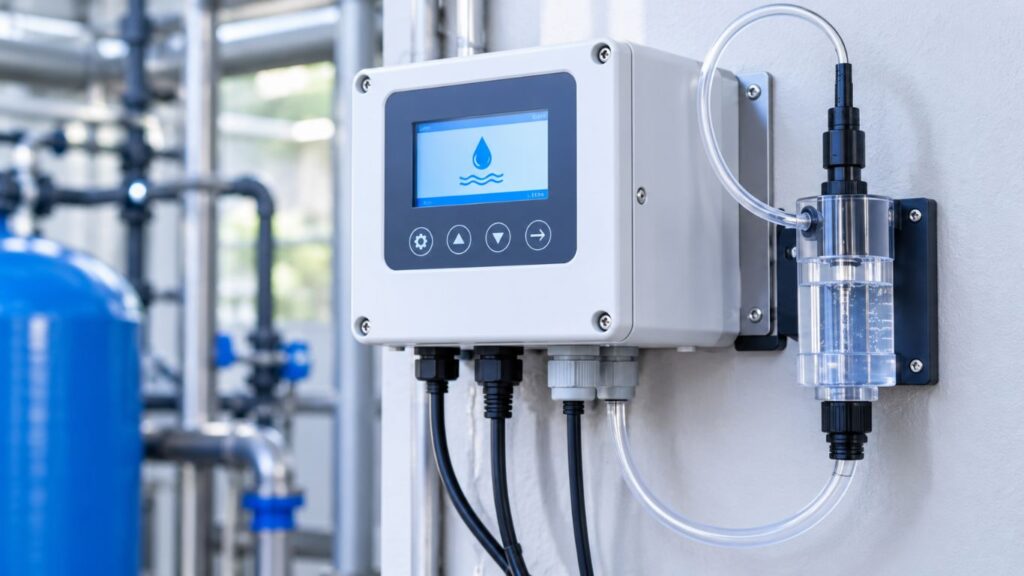
Online DPD Analyser: How It Works and When to Use One
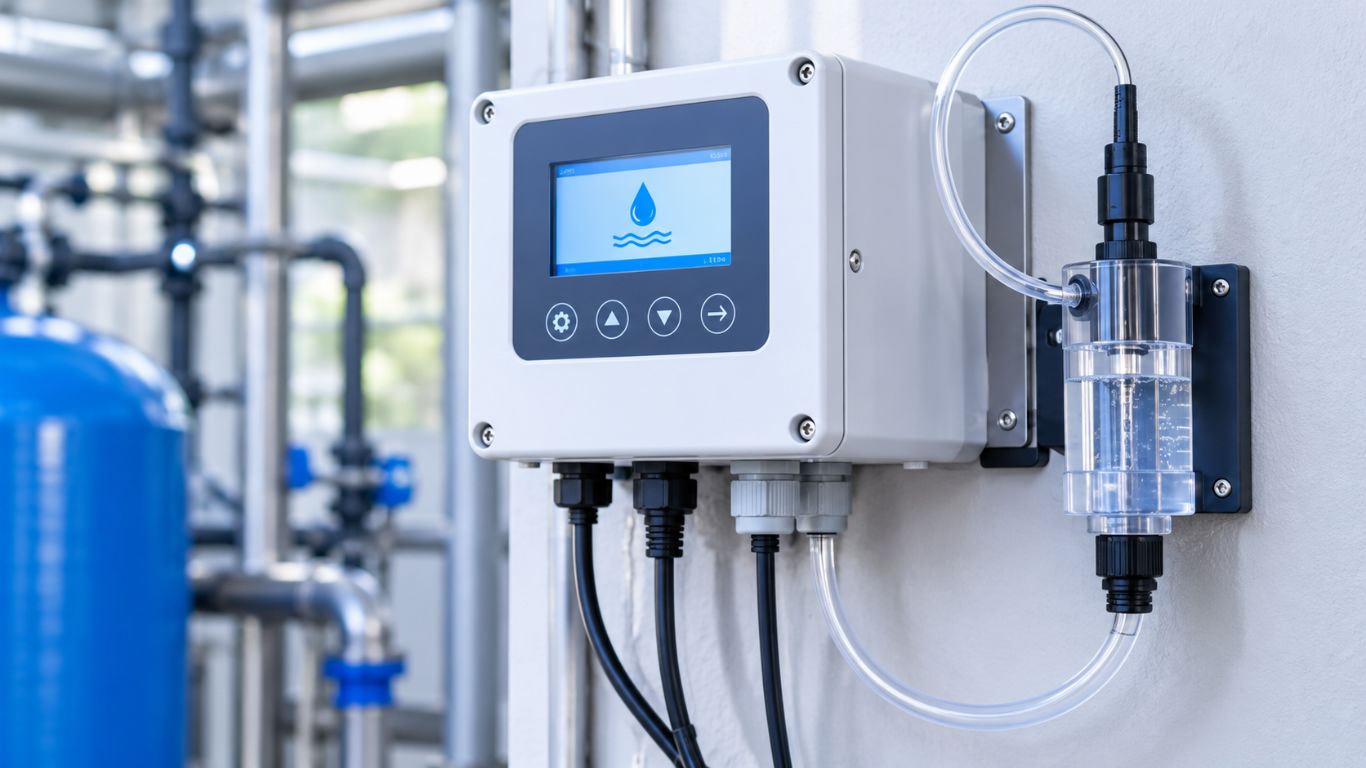
Online DPD Analyser: How It Works and When to Use One
Having a correct concentration of chlorine in water is very important. Too little and bacteria may remain, too much and excess chemicals are used, there may be strain in piping and a poor taste in water. An Online DPD Analyser will allow accurate measurement of residual/total chlorine at regular intervals. No manual sampling is needed.
Here we look at how Online DPD Analysers work, when they are suitable for use, and how to determine if it is suitable in your plant. Here we use the example of the Fluidings BH-G7800.
What is an Online DPD Analyser?
A device to automatically measure the chlorine in water samples using DPD chemistry.
DPD (N,N-diethyl-1,4-phenylenediamine) reacts with chlorine in water causing a pink reaction. The deeper the pink colour, the higher the concentration of chlorine. This chemistry has been used by lab workers for many years, using manual handheld or bench top analysers. In an Online analyser, the measurement is performed automatically continuously, and results sent to control systems or remote platforms.
How an Online DPD Analyser Works, Step by Step
The following steps are repeated to complete an analysis. The BH-G7800 performs spectrophotometric analysis. The steps are:
- Water sample enters the cell, having passed through a filter. In this case, the BH-G7800 uses 80 mesh filters to prevent interference from particulates.
- Buffer and indicator (DPD) reagents are added in measured quantities.
- Chlorine in the sample causes a reaction with the DPD reagent and creates a pink colour.
- The intensity of the colour is measured using a spectrophotometer.
- The intensity of light absorbed by the sample is converted into a concentration (mg/L). The concentration is displayed and transmitted via RS485/DTU.
- This process is repeated. The measurement frequency is <2.5 minutes for the BH-G7800.
Residual chlorine vs total chlorine
Residual chlorine refers to the free chlorine, a disinfectant. Combined chlorine refers to chlorine which has reacted with ammonia or organic molecules in the sample (chloramines). Total chlorine is the combined concentration of residual and combined chlorine. Depending on the reagents in the DPD chemistry, residual or total chlorine can be measured. The BH-G7800 unit has been designed to measure residual (total) chlorine. To ensure correct measurement, check what your regulations/process require.
Online DPD Analyser vs Chlorine Electrode
Chlorine Electrodes provide continuous measurements, have no reagents in them and as such rely on stable pH, constant flow and regular calibration. The DPD analyser provides measurements at regular intervals, requiring reagents. However, due to being a common method used in laboratories, in many plants an electrode and DPD analyser will be used together. The electrode can provide quick control, while the DPD analyser can be used to verify.
Both options are available at Fluidings. The BH5530D digital residual chlorine electrode and the BH-CL650 online residual chlorine analyser.
When to Use an Online DPD Analyser
Consider using an Online DPD Analyser if:
- -G7800 is 0.02 mg/L.You require documented chlorine measurements to meet regulations.
- To avoid over/under dosing. Over dosing causes excessive chemical usage. Under dosing means effective disinfection may not occur.
- Sample locations are unattended. Remote monitoring can reduce the need to visit regularly.
- Requirements are rapidly changing. Due to fluctuating flow rates, daily manual samples may not be quick enough.
- Very low concentrations need to be measured accurately. The BH-G7800 has a detection limit of 0.02 mg/L.
Common uses include potable water treatment, industrial process water and effluent monitoring. Other applicable industries include safety, environmental protection, oil, chemical, pharmaceutical, metallurgy, coal chemical and storage, as listed on the BH-G7800 page.
When manual testing may be sufficient
In a small process with stable water quality, only 1 sample location and a daily testing requirement, manual testing may be sufficient. As handheld testing is cheaper than automated methods, consider this option. The Online DPD Analyser will become cost-effective in processes with increased sample frequency requirements, increased labour requirements, or increased risk.
A Practical Example: The BH-G7800
Fluidings’ BH-G7800 is an Online DPD analyser for residual (total) chlorine. Key features include:
- Measurement Range – 0 to 10 mg/L.
- Accuracy – ±5% or ±0.05 mg/L (whichever is larger) between 0-5mg/L. ±10% between 5-10mg/L.
- Repeatability – ≤3%.
- Resolution – 0.01 mg/L.
- Manual Measurement, Continuous or Periodic Measurement.
- Reagents – 0.5L indicator reagent and 0.5L buffer reagent. Enough for approximately 30 days.
- Installation – Wall mounted analyser. Indoor use. Size 580 x 400 x 240mm. Weighs less than 20kg.
- Operating Conditions – 5-40 oC, Humidity <90% RH (Non-condensing). Power supply 220V AC.
It also offers automatic diagnosis, remote monitoring and software with historical trend charts. You can view the full details on theBH-G7800 product page.
Practical Tips for Installation and Upkeep
- Try to install close to sample. Keep tubing short with no air bubbles.
- Ensure conditions are within operating ranges. In general, condensation in analysers causes problems for optical devices.
- Clean filters and flow cell regularly.
- Ensure reagents are topped up, and note date changed.
- Compare results with handheld DPD tests occasionally.
How to Choose an Online DPD Analyser
Consider the following factors:
- Measurement range – Is it suitable for typical and maximum levels in your chlorine?
- Accuracy – Does the accuracy and detection limit meet the required compliance level?
- Speed – Is the measurement interval quick enough for your process?
- Reagent volume and topping up – Who will top these up? How much will be used?
- Communication Output – Does it have the communication output required? (RS485/DTU).
- Supplier support – Will they be able to help commission and provide parts?
Conclusion
An Online DPD analyser provides a regular, reliable and documented measurement of chlorine. It is best suited in plants where compliance, cost of dosing or remote operations are important. If a simple test kit is sufficient in your plant, this may be adequate. If choosing between electrode or controller methods of chlorine monitoring, take a look at the range of chlorinators available, or contact us at info@fluidings.com or +91 8928335585. Or make an enquiry for a quotation.
FAQs
1. What does an Online DPD analyser measure?
An Online DPD analyser measures residual or total chlorine in a water sample. A sample is mixed with DPD reagent and the intensity of pink colouration is measured by the analyser. At specified intervals (usually a few minutes) a concentration value (mg/L) is given.
2. What is the difference between a handheld DPD kit and an Online DPD analyser?
With a handheld DPD kit, timing and technique can affect test results as samples must be taken and reagents added manually. With an Online DPD analyser, measurements are repeated automatically at regular intervals. Therefore, reliable results and trends can be achieved without manual sampling.
3. How often will this require maintenance?
Regular maintenance will involve topping up reagents, cleaning the flow cell and checking the filter. With the BH-G7800, 0.5L of indicator and 0.5L of buffer reagent will last for approximately 30 days. Accuracy can be verified periodically by comparing with lab or handheld results.
4. Where is this commonly used?
This analyser is common in potable water treatment processes, industrial process water, cooling circuits, effluent outlets and sites within the pharmaceutical, chemical, oil and metallurgy industries. It will be most useful in sites with documented chlorine control requirements, or remote unattended sample points.
5. Should I choose a DPD analyser or Chlorine Electrode?
Chlorine electrodes offer continuous measurements, however do not require reagents. They require stable pH, flow and regular calibration. DPD analysers require reagents, but DPD chemistry is very well established. Many sites will use both devices to provide control (electrode) and verification (DPD analyser).